

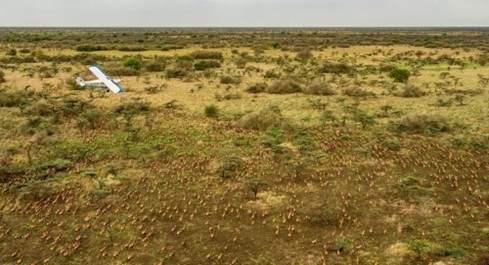
This blog by Emmanuel Louis, discusses conflict-sensitivity considerations for sequencing conservation investments in South Sudan amid widespread humanitarian needs. While humanitarian aid has been essential in sustaining lives and supporting communities in the context of prolonged instability, there is a growing shift among donors and policymakers towards longer-term priorities, including environmental governance and conservation investment. The blog, against this backdrop, contends that aligning conservation with ongoing efforts to support livelihoods, protection, and basic services is essential to safeguarding its legitimacy and local acceptance. Moreover, the blog discusses requirements to benefit-sharing mechanisms and the responsiveness of conservation initiatives and makes multiple recommendations for conflict sensitive and well-sequenced programming.
Introduction
South Sudan is entering a critical phase in its development trajectory. For over a decade, humanitarian response has been central to how needs have been addressed — through food assistance, protection services, emergency health provision, and crisis coordination systems. These interventions have been essential in sustaining lives and supporting communities in the context of prolonged instability. There is now a growing shift among donors and policymakers towards longer-term priorities, including environmental governance and conservation investment. This reflects a broader effort to diversify economic pathways, strengthen natural resource management, and gradually reduce structural reliance on emergency assistance.
South Sudan’s ecosystems — from wetlands and forests to savannahs and migratory corridors — are of global ecological significance. Managed inclusively, they hold potential for climate finance, biodiversity conservation, and locally grounded economic opportunities. However, while the rationale for this shift is widely framed in technical and global policy terms, transitions of this nature are often felt at community level, where access to land and natural resources is closely tied to identity, livelihoods, and social relations. In contexts affected by conflict and fragility, how interventions are introduced — and whose priorities they reflect — fundamentally shapes how they are received. As conservation investment gains traction, the key question is not only whether it is needed, but how it can be implemented in ways that support both environmental sustainability and social cohesion.
For instance, land in South Sudan is not simply an environmental asset, it is deeply embedded in systems of authority, belonging, and historical experience. Customary and statutory frameworks coexist, often creating ambiguity around ownership, access, and decision-making. Legacies of displacement, return, and localised tensions further shape how land-related interventions are interpreted.
In this context, conservation initiatives inevitably intersect with governance dynamics and community relations. A conflict-sensitive approach therefore requires more than an ecological assessment. It demands an understanding of who holds influence, who is excluded, and how different groups are likely to experience intervention in practice. This is not an obstacle to conservation investment, but a foundation for ensuring legitimacy and sustainability.[1]
A people-centred approach to conservation
Across South Sudan, communities have long engaged in environmental stewardship through pastoralism, fishing, and forest-based livelihoods. These systems are grounded in local knowledge and adaptive practices shaped by seasonal and ecological realities. A people-centred approach to conservation builds on these foundations. It moves beyond consultation towards meaningful participation in decision-making and implementation. This includes ensuring that women and men, boys and girls, and marginalised groups are not only consulted, but are engaged in shaping priorities and influencing outcomes.
Where communities are engaged as partners, conservation initiatives are more likely to reflect local realities and gain legitimacy. Where they are perceived as externally driven, they risk reinforcing mistrust, exclusion, or passive compliance without ownership. [2]
Applying a ‘Do No Harm’ lens
For many households, access to land, mobility, and natural resources is central to livelihoods and coping strategies. Grazing routes, water points, and fishing and hunting areas remain critical, particularly under conditions of climatic stress and seasonal pressure. Conservation measures — including zoning, protected areas, or access restrictions — therefore carry significant social implications. Without careful design, they may unintentionally disrupt livelihood systems or heighten tensions between groups competing over scarce resources.[3]
A conflict-sensitive approach involves:
- aligning conservation initiatives with livelihood support systems
- integrating protection and context analysis into programme design
- monitoring community perceptions and emerging risks
- sequencing interventions so that viable alternatives exist before restrictions are introduced
- establishing effective community engagement, with clear messaging, complete feedback loops and problem-solving
Environmental objectives and human wellbeing are closely interconnected, particularly in fragile and conflict-affected settings.
Equity and benefit-sharing
How benefits are distributed plays a central role in shaping perceptions of conservation. Opportunities linked to conservation — such as employment, compensation schemes, or infrastructure development — can contribute to local economies. However, the critical issue is not only who benefits, but who controls the revenue streams that generate those benefits.
In South Sudan’s fragmented governance context, these flows are often mediated between state institutions, private actors, NGOs, and community-level authorities, with uneven transparency and lack of accountability. This creates a layered system of control in which formal state structures, customary authorities, and external actors may simultaneously influence resource allocation. Within this landscape, ‘community’ is not a single or uniform actor. Access to land and resources is shaped by clan systems, customary governance, and local power hierarchies, which vary significantly across contexts. Gender and age further structure these relations, with women and youth often positioned farther decision-making, despite their central role in livelihood systems and resource use.[4]
As a result, perceptions of fairness are shaped less by the existence of benefit-sharing mechanisms, and more by the legitimacy and transparency of those who design and control them. Where these systems are externally driven or insufficiently accountable, they risk reinforcing existing inequalities and deepening contestation over both access and authority. Equity, therefore, is not only a matter of fairness, but rather it is central to trust, legitimacy, and social cohesion.[5]
Accountability and responsiveness
Access to clear and timely information remains a challenge in many areas, where misunderstandings can escalate quickly and shape perceptions of exclusion or unfairness. Establishing accessible feedback and grievance mechanisms allows communities to raise concerns and influence programme adjustments. This supports more adaptive programming, enabling interventions to respond to changing dynamics on the ground. Setting up responsive conservation programmes is a key element in building trust between communities, implementing organisations, and authorities.
Conservation amidst a context of humanitarian needs
While the shift towards conservation investment reflects an important policy evolution, humanitarian needs remain significant across South Sudan. Food insecurity, displacement, and protection risks continue to affect many communities, and humanitarian assistance therefore remains a critical component of the overall response landscape. Conservation initiatives need to be carefully sequenced and contextualised within these realities. Where environmental investments are perceived as disconnected from immediate survival needs, they may face resistance. Therefore, aligning conservation with ongoing efforts to support livelihoods, protection, and basic services is essential. For example, while hunting wildlife is illegal in South Sudan, communities that live in and around the wildlife conservation areas may rely on wildlife for food and other livelihood needs.
Conservation as a peacebuilding opportunity
Environmental governance can contribute to broader peacebuilding processes where it creates space for dialogue, cooperation, and shared decision-making over land and natural resources. When designed inclusively, conservation initiatives can strengthen local governance processes and encourage collective stewardship, promoting sustainability and social cohesion at the same time. However, conservation is not inherently stabilising: it can also become a source of tension where it intersects poorly with existing power dynamics, historical grievances, and unequal access to resources under the language of progress.
In such contexts, how conservation projects are designed and embedded within local realities includes considering how priorities are set, how resources are controlled, how conflicts are identified and addressed, and whose voices shape decision-making at different levels. Conservation in South Sudan can therefore either support peacebuilding or unintentionally reproduce drivers of conflict — depending on how it engages with context, legitimacy, and local agency.
Recommendations
To support more conflict-sensitive and inclusive conservation investment in South Sudan, the following considerations are relevant for policymakers, donors, and practitioners:
- Prioritise cultivating a good understanding of the context in which conservation in South Sudan is. Integrating proper knowledge of the political, social, and conflict situation of the different conservation areas in South Sudan in any conservation planning will go a long way in ensuring that problems are identified and the right actors are engaged through the various conservation interventions.
- Strengthen inclusive participation: Ensure meaningful involvement of women, youth, men and marginalised groups in decision-making, including co-management structures and problem identification and resolution mechanisms.
- Promote equitable benefit-sharing: Establish transparent mechanisms that are understood and perceived as fair across different groups.
- Design interventions carefully, in ways that align them with livelihood support systems and community priorities, particularly where basic needs remain acute. Ensure that conservation initiatives are aware of and sensitive to other short- and long-term forms of assistance programming.
- Link conservation to peacebuilding: Recognise environmental governance as part of broader efforts to strengthen social cohesion and conflict sensitivity. Become aware that tensions, perceptions and conflict will arise in the way conservation interacts with other factors, and ensure that conflict resolution and conflict sensitivity are embedded and budgeted for in any conservation investments.
- Invest in accountability mechanisms: Support accessible feedback and grievance systems that enable adaptive programming. Ensure that monitoring and reporting of conservation outcomes is also made meaningful to the conservation communities.
The recent increase in conservation investment presents important opportunities for South Sudan. However, its success will depend on whether it is inclusive, context-aware, and responsive to lived realities. In fragile contexts, questions of whose conservation and whose development are not abstract. They shape how change is experienced — and whether it can be sustained.
———————————————-
[1] See more global lessons on conflict-sensitive conservation from the Global Environment Facility (GEF): Bruch, C. et al. (ed.) (2023): Conflict-Sensitive Conservation: Lessons from the Global Environment Facility. https://doi.org/10.4324/9781003351399.
[2] This inclusion of communities into conservation-related decision making in South Sudan is closely examined for the case of the Kidepo Game Reserve in this 2025 CSRF analysis: https://csrf-southsudan.org/repository/csrf-analysis-conservation-with-the-people-considering-local-communities-perspectives/.
[3] This was prominently recognised with the adoption of IUCN motion 57 on conflict-sensitive conservation in 2025: https://csrf-southsudan.org/including-peace-in-conservation-conflict-sensitivity-at-the-world-conservation-congress-and-lessons-from-south-sudan/.
[4] A recently published CSRF analysis, in collaboration with the Likikiri Collective, highlights the important role of youth in South Sudan’s ‘Green Transition’: https://csrf-southsudan.org/repository/csrf-analysis-its-like-a-war-of-liberation-youth-and-the-green-transition-in-juba-south-sudan/.
[5] CSRF research in 2025 highlighted how shared benefits from conservation efforts are too often negotiated in transactional terms, causing limited success in South Sudan. In conclusion, the report calls for a more collaborative approach: https://csrf-southsudan.org/repository/csrf-analysis-conservation-with-the-people-considering-local-communities-perspectives/.